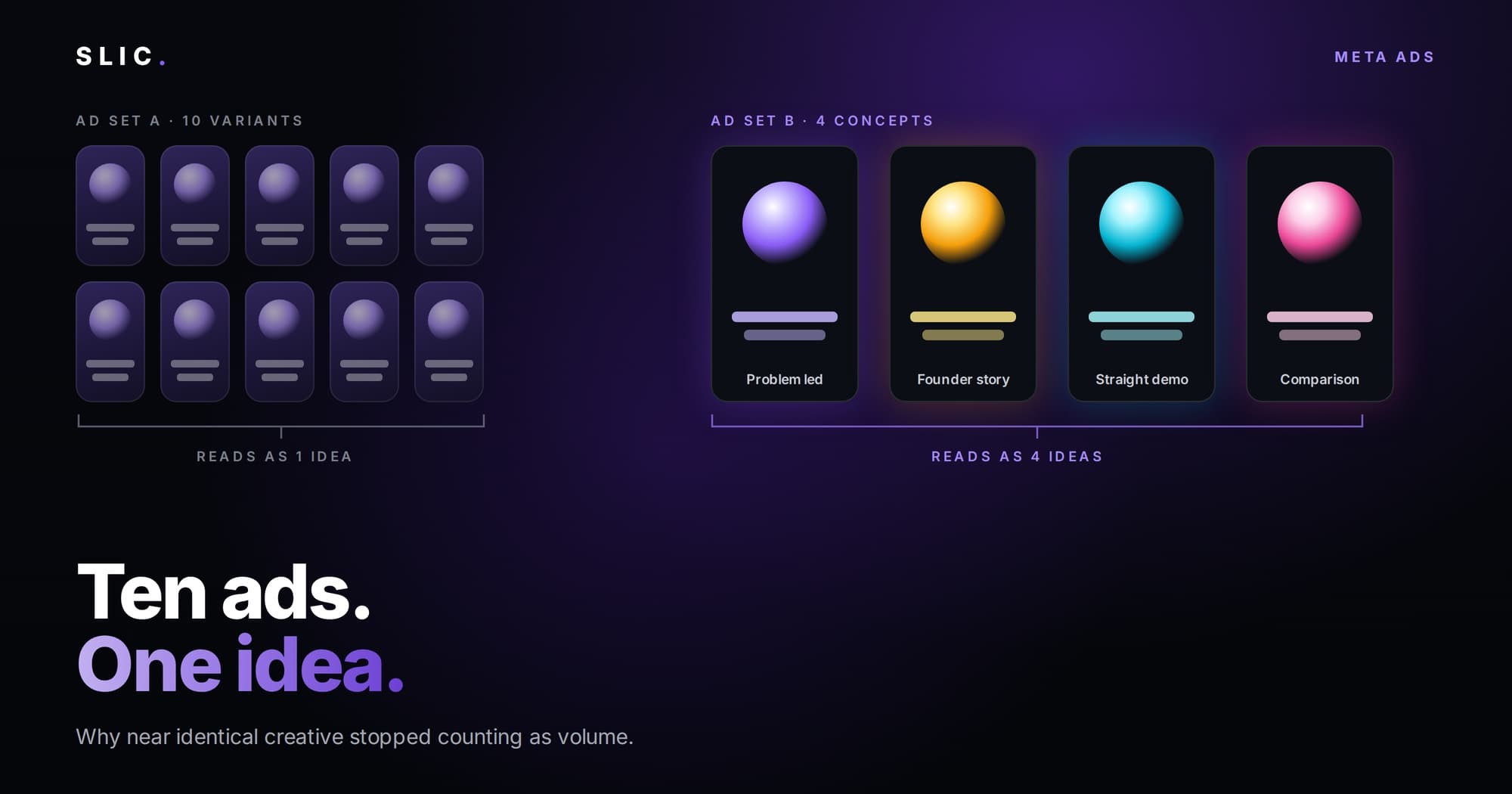
Andromeda is the part of Meta's ad system that decides which ads get considered for a person at all, before any auction happens. Since it rolled out, it's become the explanation for almost everything that happens in an account, good or bad. Some of that is fair. A lot of it is guesswork said with confidence.
This is what Meta has said, what everyone else has filled in, and what it means for the creative you make.
What Meta has actually said
Meta described Andromeda in an engineering post in December 2024. It's a retrieval system. Its job is to narrow tens of millions of possible ads down to the few thousand that the later ranking stages look at properly. Meta reported a 6 percent improvement in recall, and an 8 percent improvement in ads quality on selected segments.
The reason it was built matters more than those numbers. Meta said the amount of creative in the system had grown sharply, partly because of generative AI, with more than a million advertisers using its AI tools to make over 15 million ads in a single month. The old retrieval system wasn't built to sort through that much.
Meta's advice to advertisers since then has been consistent. Creative diversification is the main lever you control: different concepts, different formats and different messages for different people.
What's guesswork
A lot of confident claims about Andromeda don't come from Meta. You'll see talk of entity IDs, exact similarity thresholds and rules about how much text an ad can carry before it gets held back. Entity ID is industry shorthand for the idea that similar ads get grouped together. Meta doesn't publish that term, and nobody outside Meta can see how the grouping actually works.
That doesn't make the observations behind it wrong. It means you should treat precise numbers with suspicion and judge any advice by whether it holds up in your own account.
Why ten similar ads now act like one
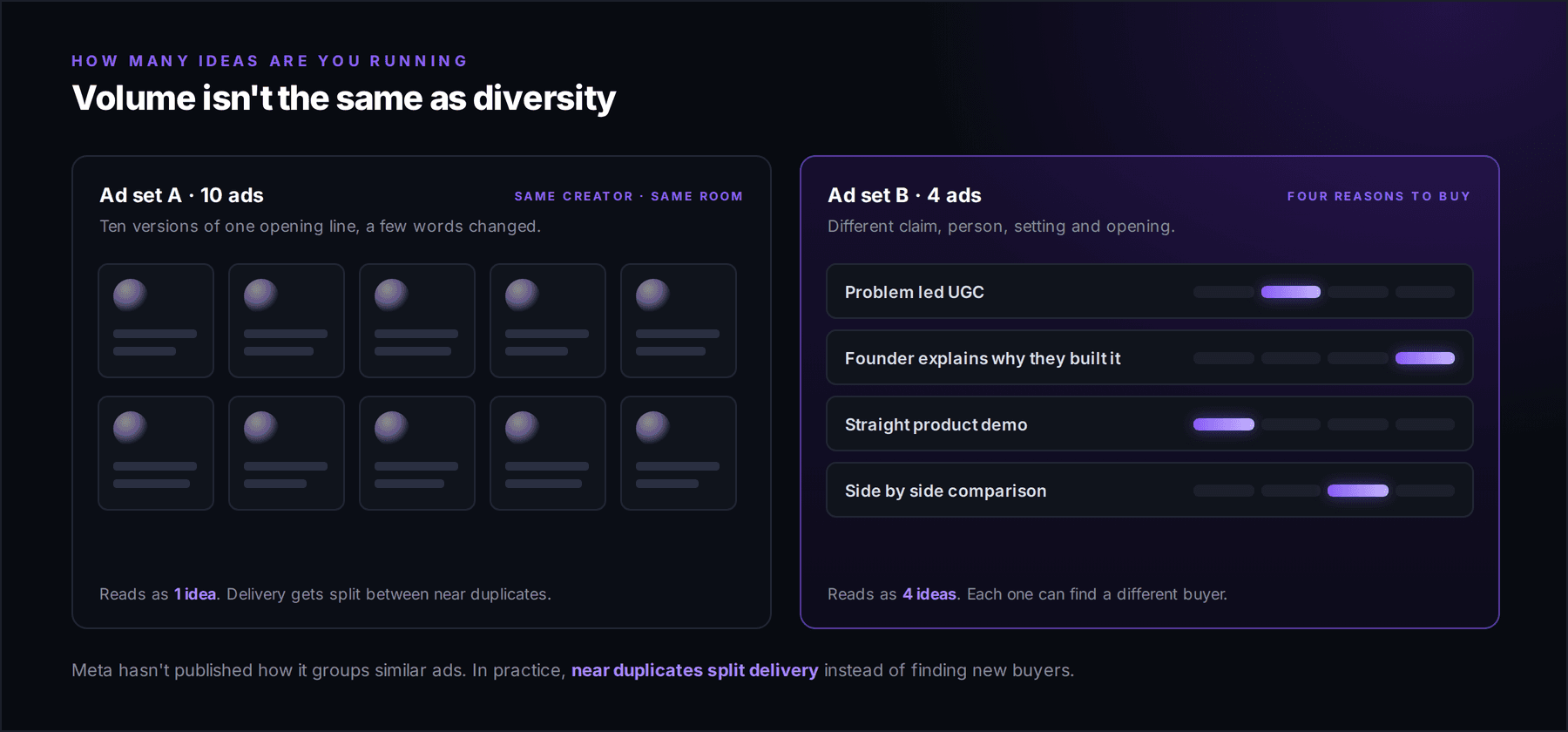
This is the part that matters day to day. When an ad set is full of near duplicates, the system appears to treat them as one idea. Think the same creator in the same room saying the same opening line with a few words changed. Delivery gets split between them rather than reaching new people, so the volume you paid for doesn't buy much extra reach.
Ads that are actually different behave differently. A problem led UGC ad, a founder explaining why they built the product, a straight demo and a side by side comparison can each find a different group of buyers, because each one speaks to a different reason for buying.
What to change in how you brief
Brief by angle and by buyer. Before anything gets made, list the distinct reasons someone buys your product and the distinct types of person who buys it. Each combination worth testing is a concept. Variants of a concept, like a new hook or a shorter cut, are still worth making, but they're versions of one idea rather than extra ideas.
Real diversity comes from the claim, the person on screen, the setting, the format and the style of the opening. Changing the colour of the captions doesn't count.
In the account, give each concept its own ad set in the testing campaign so you can see which argument won. The full setup is in how to structure a Meta account around creative.
What didn't change
The fundamentals are exactly where they were. A weak hook still loses people in the first three seconds. A slow middle still drags down hold rate. A good ad still wears out, and fatigue still shows up in frequency and hook rate before it reaches your CPA, as covered in creative fatigue: spot it before your CPA does.
The budget arithmetic hasn't changed either. More distinct concepts means more spend to read them properly, so the number of concepts you test should come from your budget rather than a rule of thumb. How much of your budget should go to creative testing goes through the maths.
A five minute check for your account
Open your best performing ad set and write one sentence describing each active ad. Just the idea: who's talking, what they're claiming and how it opens.
If more than half of those sentences are basically the same, you're running fewer ideas than you think. The next brief should be a new angle. Another version of the one you've already got won't add much.