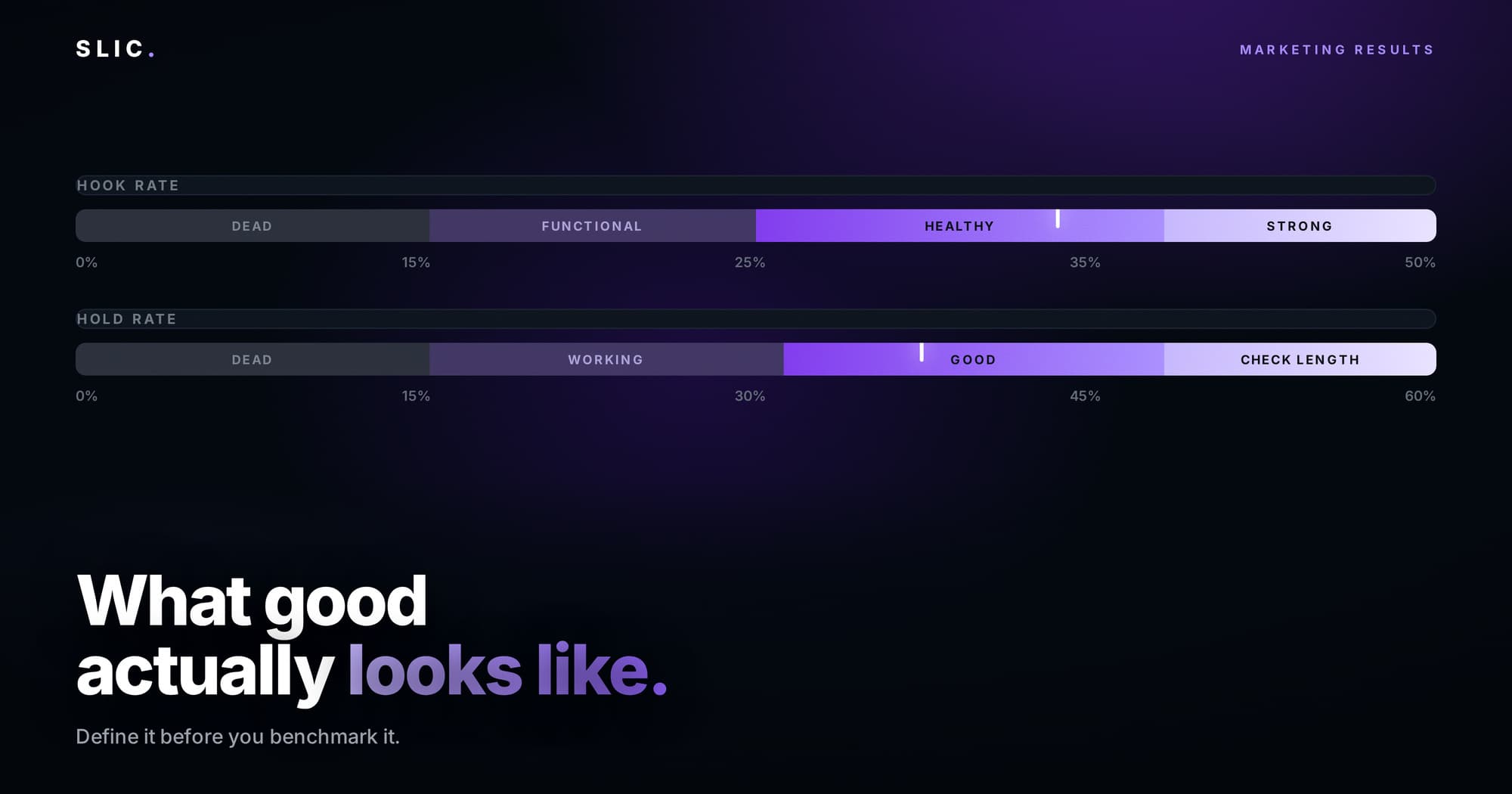
On Meta prospecting, a hook rate of 25 to 35 percent is healthy and anything under 15 percent is a dead opening. Hold rate of 20 to 30 percent at the halfway mark is workable, and above 40 percent is strong. Those ranges are a starting point, not a target. Your own trailing average matters more than any of them.
This page exists because these two metrics get quoted constantly and defined inconsistently. Half the arguments about whether a hold rate is good are actually arguments about what was being measured.
Define them before you compare them
Hook rate is three second video plays divided by impressions. Some teams use two second continuous plays instead, which produces a materially lower number. Pick one, write it down, and never mix the two in the same report.
Hold rate has three common definitions and they are not interchangeable:
- Still watching at 15 seconds, divided by impressions
- Still watching at 50 percent of length, divided by three second plays
- ThruPlays divided by impressions
The second definition produces a number roughly two to three times higher than the first, because the denominator is already filtered to people who did not scroll past. Most published benchmarks do not say which one they used, which is why most published benchmarks are unusable.
Everything below uses hook rate as three second plays over impressions, and hold rate as viewers at 50 percent of length over three second plays.
Ranges that hold up across DTC accounts
These are directional. Category, price point and placement move all of them.
- Hook rate under 15 percent. The opening is not working. No downstream fix helps.
- Hook rate 15 to 25 percent. Functional. Worth iterating on.
- Hook rate 25 to 35 percent. Healthy for cold prospecting.
- Hook rate above 40 percent. Strong, but check hold rate immediately. A very high hook rate with a poor hold rate usually means the opening was misleading.
- Hold rate under 15 percent. The ad is not holding anyone. Structural problem.
- Hold rate 20 to 30 percent. Normal working range.
- Hold rate 30 to 45 percent. Good. Across the accounts we run, the portfolio average sits at 47 percent.
- Hold rate above 50 percent. Either excellent, or the ad is short enough that the halfway mark arrives before anyone had a chance to leave.
That last caveat matters more than people expect. A 10 second ad and a 45 second ad measured at 50 percent of length are being asked completely different questions. Compare like with like or the number lies to you.
What moves these numbers, aside from creative
Four variables change hook and hold rate without the ad getting better or worse.
Placement. Reels produce higher hook rates than Feed almost universally, because the format is full screen and autoplaying with sound. The same ad can differ by 15 points between placements.
Length. Shorter ads post higher hold rates by construction. Nothing about the creative changed.
Audience temperature. Retargeting audiences hook better and hold better because they already know you. Never benchmark retargeting against prospecting.
Category. Visual transformation categories run high. Considered, technical or unglamorous products run lower and always will. A supplement brand and a power tool brand should not be reading the same benchmark.
Segment by all four before comparing anything. An unsegmented average across placements and audiences is arithmetic, not information.
The combination is the diagnosis
Neither number means much alone. Together they point at a specific failure.
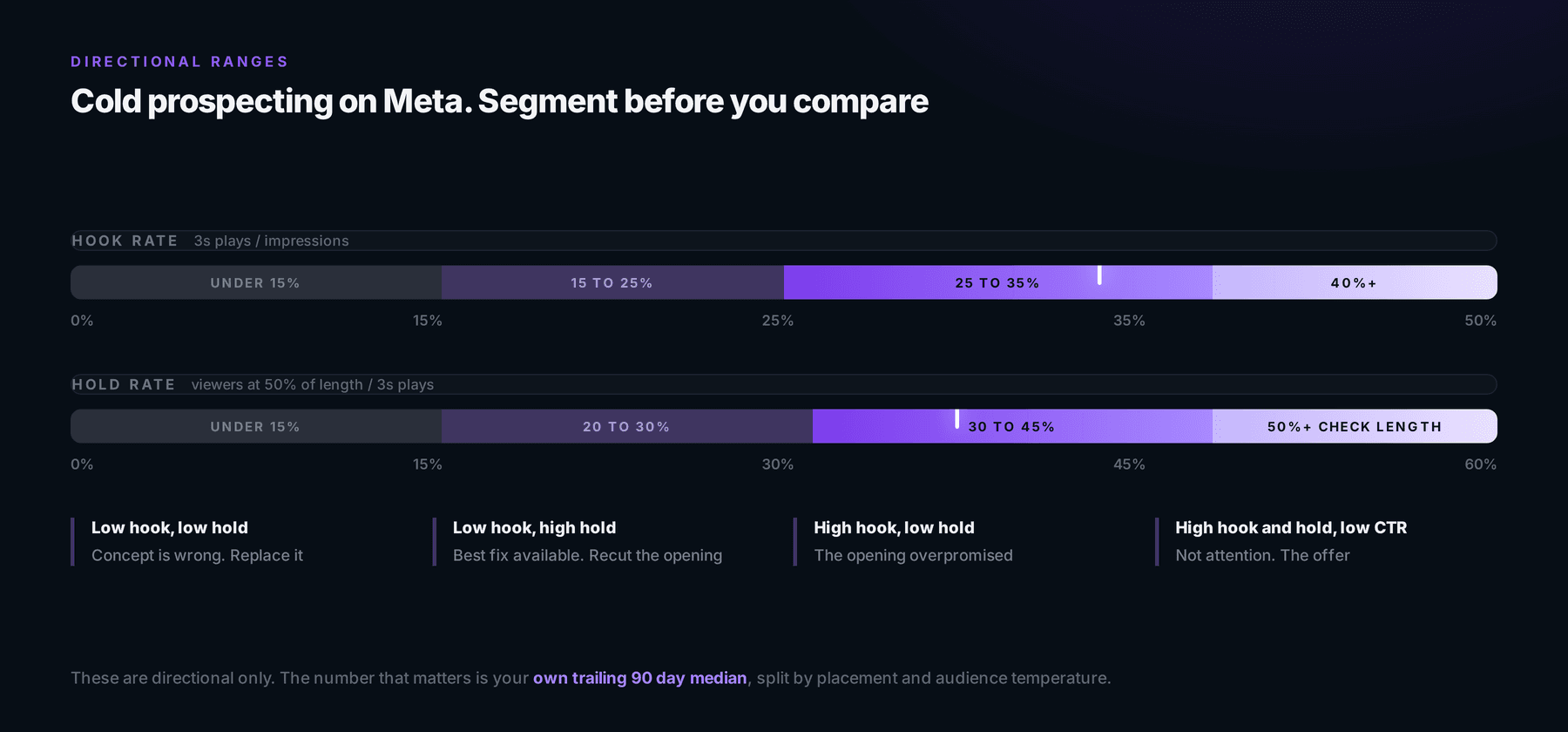
- Low hook, low hold. The concept is wrong. Do not iterate, replace it.
- Low hook, high hold. Good ad, bad opening. Highest value fix available, because the expensive part already works. Recut the first two seconds.
- High hook, low hold. The opening overpromised. Most common pattern in performance video, and the diagnosis is in why your hook dies at three seconds.
- High hook, high hold, low CTR. Not an attention problem at all. The offer is not compelling enough to act on.
That second case is the one worth hunting for in your account this week. A good ad with a weak opening is the cheapest performance gain available to anyone, and it is invisible if you only ever look at CPA.
Build your own benchmark
Pull the last 90 days. Segment by placement and by audience temperature. Take the median, not the mean, because one viral outlier distorts an average badly.
That median is your line. Every new ad gets compared to it. When a batch beats it consistently, move the line.
Published benchmarks including this page are useful for one thing only: telling you whether you are in a completely different universe from normal. Once you know you are not, stop reading them and start comparing yourself to yourself. The full metric sequence and what each one diagnoses is in the five numbers that tell you if a creative is working.