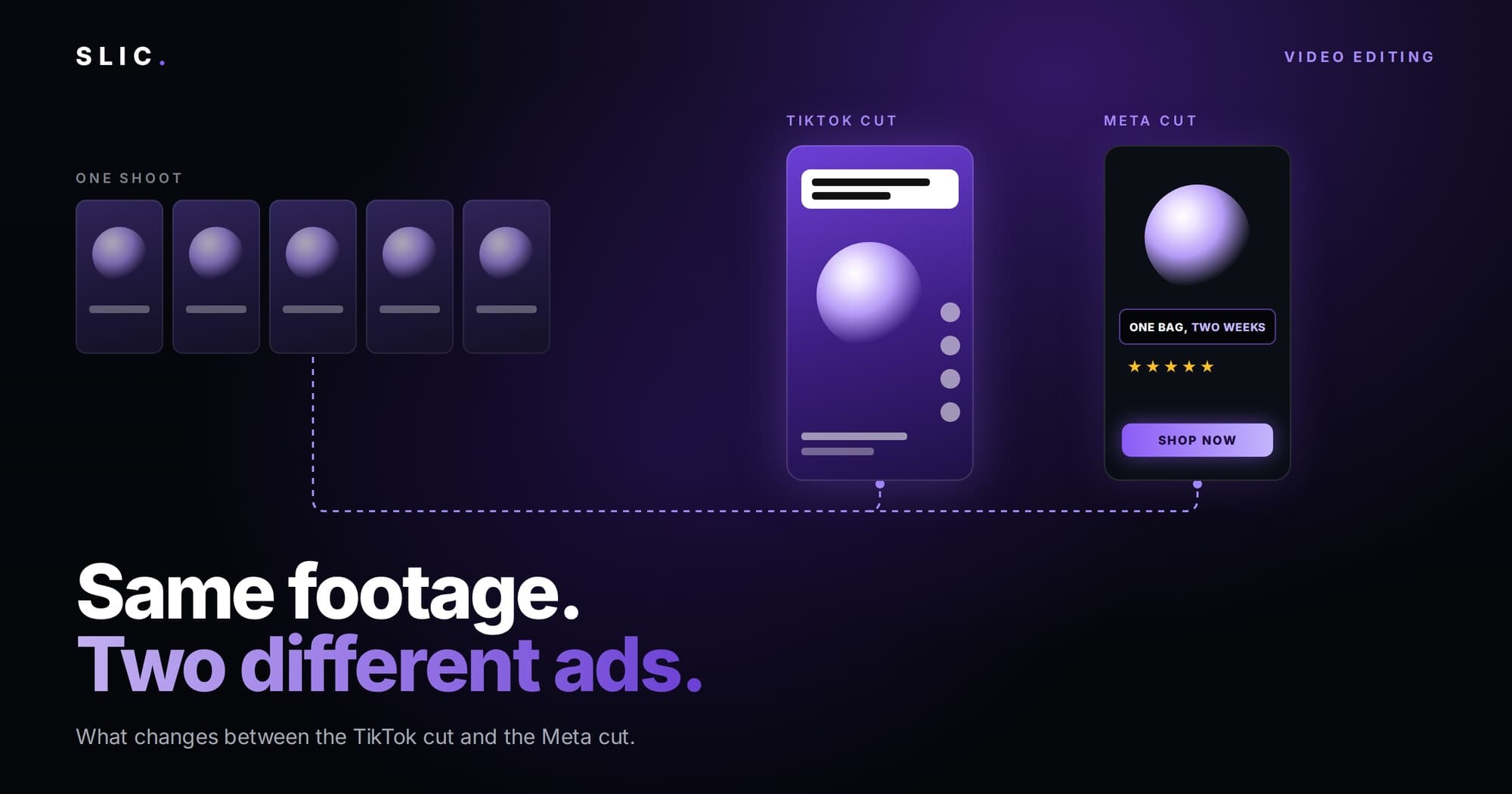
Running the exact same cut on TikTok and Meta usually means one of the two is getting the wrong ad. The footage can be shared, and so can the argument. The way the first few seconds look, sound and read needs to change, because people arrive on each platform in a different frame of mind.
Why the same ad lands differently
On TikTok, people are there to be entertained, and they're very good at spotting something that looks like an ad. Anything polished, anything that opens on a logo, anything that looks like it came out of a brand's marketing team gets skipped before it's had a chance.
Meta is broader. Reels behaves a lot like TikTok, but the feed, Stories and the older audience on Facebook are far more comfortable with a clear product, a clear offer and a brand that says who it is. More of that viewing also happens with the sound off.
What changes for TikTok
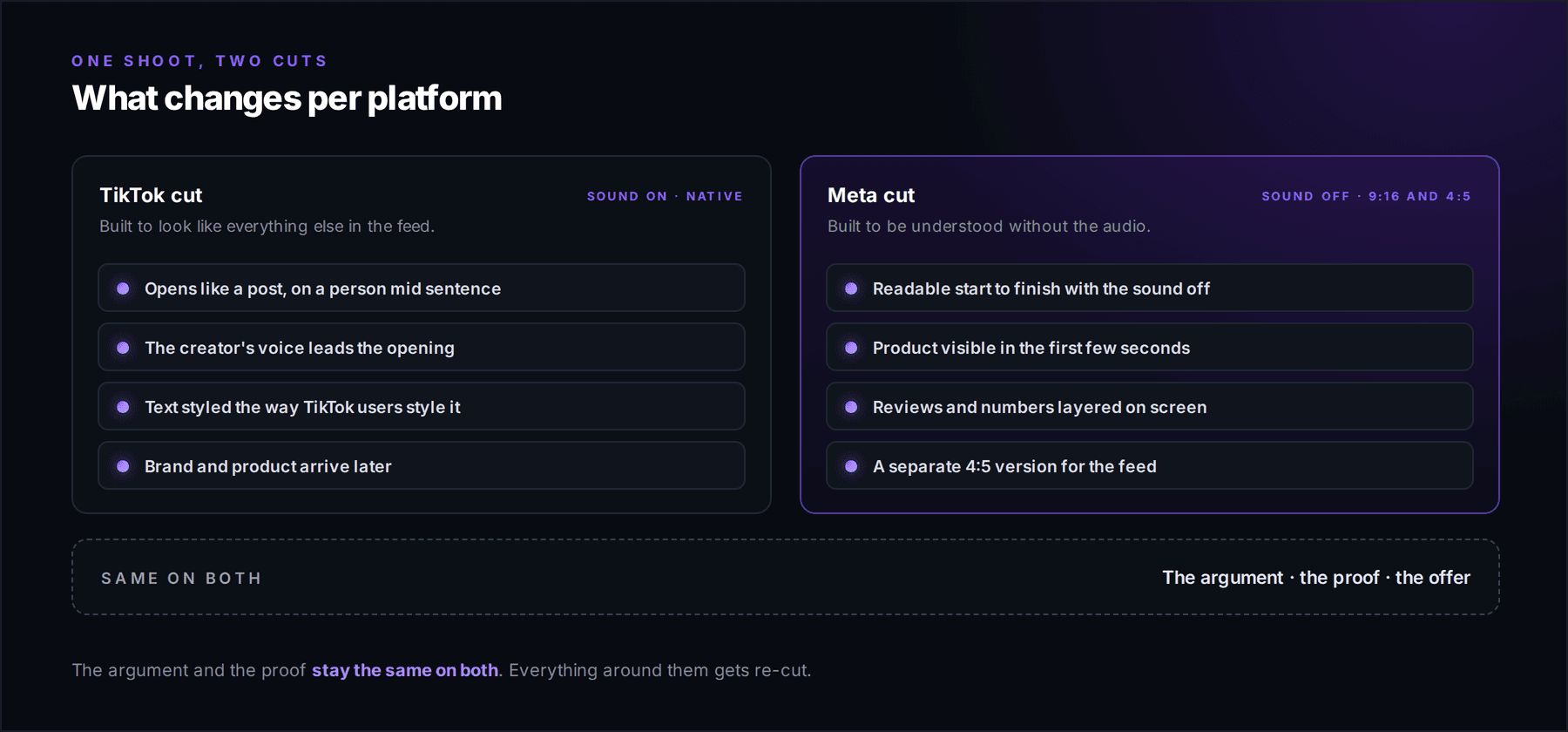
The first frame looks like a post. A person mid sentence or mid action, filmed on a phone. No logo, no title card, no product shot on a white background.
Sound leads. TikTok is a sound on platform for most of the people using it, so the creator's voice and the audio carry the opening. One practical catch: anything that runs as an ad needs commercially licensed audio, which on TikTok usually means the Commercial Music Library. The sound that's trending this week often isn't available to you.
The text looks native. On-screen text styled the way TikTok users style it reads as content. Heavily branded supers read as advertising.
The brand arrives later. Earn the attention first, then show the product. The name can wait until the viewer's already interested.
What changes for Meta
It has to work muted. Captions and on-screen text carry the argument, so someone who never turns the sound on still gets the claim, the proof and the offer.
The product shows up sooner. Meta audiences tolerate a clear look at the product in the first few seconds, and often respond to it.
Proof gets layered on screen. Reviews, numbers and comparisons sit on top of the footage instead of waiting for their own section.
You need more than one shape. 9:16 for Reels and Stories, and 4:5 for the feed. A 9:16 video cropped to 4:5 without reframing usually cuts off captions or faces, so the feed version needs its own pass.
What stays the same
The argument, the proof and the offer. If a concept wins on one platform, the reason people bought is usually the same on the other. The packaging around it is what changes.
That's also why it's worth proving a concept on one platform before adapting it. A new idea launched on both at once, in two different cuts, gives you two sets of noise to read instead of one clear answer.
Don't read one platform with the other's benchmarks
The metrics aren't defined the same way. Meta reports 3 second video plays, which is what most people use for hook rate. TikTok reports 2 second and 6 second views. A good number on one isn't directly comparable to the other, and treating it as if it were will have you chasing problems that don't exist.
Set separate benchmarks for each platform from your own account history. Our starting points for Meta are in hook rate and hold rate benchmarks, and if you're deciding how long each cut should run, how long should a video ad be covers that.
Run it from a person's handle where you can
Both platforms let you run ads through a creator's account instead of only the brand's. On TikTok that's Spark Ads, which run an organic post from your account or a creator's as the ad. On Meta it's partnership ads, which show the creator's handle alongside yours.
It matters most on TikTok, where an ad from a person's account looks like everything else in the feed. On Meta it's worth testing, particularly for UGC, because the creator's name at the top of the ad does some of the trust building before the first line lands.
Either way, agree usage rights with the creator up front, including how long you can run their content and on which platforms.
Plan for both cuts at the shoot
Most of the work happens before the edit. Ask the creator for a native style opening and a more direct, product led one. Capture the product clearly for the Meta version, and capture plenty of candid, in the moment footage for the TikTok version.
The edit then becomes mostly reassembly, and you get two platform specific ads for close to the cost of one.